.png)


While cannabis remains illegal at the federal level in the U.S., businesses in the industry face structural disadvantages that most other companies don’t. They often lack access to traditional banking and credit, incur higher security and compliance costs, are barred from listing on major U.S. stock exchanges, and operate under legal uncertainty that deters institutional investors. On top of this, IRS Code 280E prevents cannabis companies from deducting normal operating expenses, resulting in effective tax rates that can exceed 60–80%, situations where sales appear profitable but cash flow is negative, and ongoing reinvestment and liquidity challenges that strain long-term viability.

Relying on manual spreadsheets to run a business creates predictable pain: human error is constant, version control is chaotic, and teams waste hours copying, pasting, and reconciling data across files. As the business grows, spreadsheets become fragile and slow, processes lack clear ownership or workflow, and reporting is always outdated. Critical knowledge lives in the heads of a few “spreadsheet experts,” security and access controls are weak, and attempts at automation are brittle and hard to maintain. The biggest cost is opportunity, talented people spend their time maintaining spreadsheets instead of driving insight, speed, and growth... making spreadsheets useful tools, but poor systems for running a scalable business.
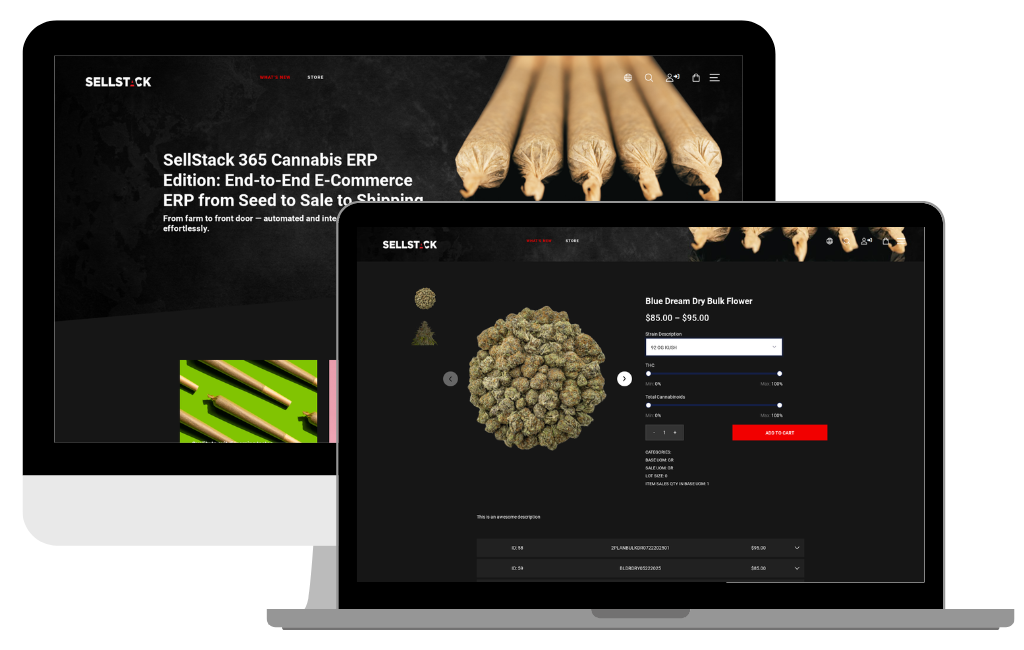
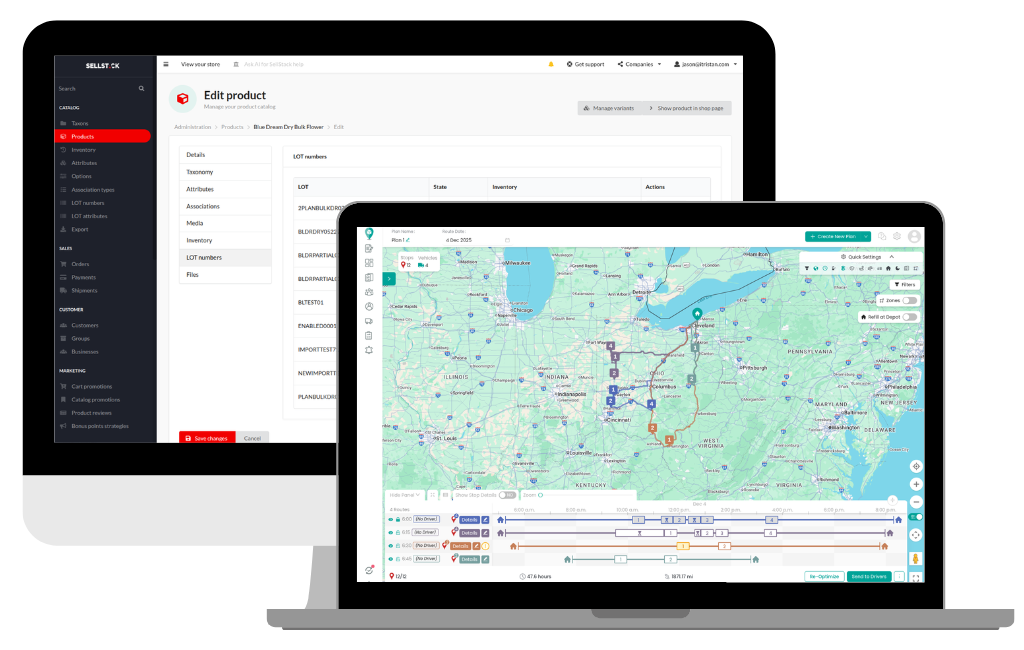
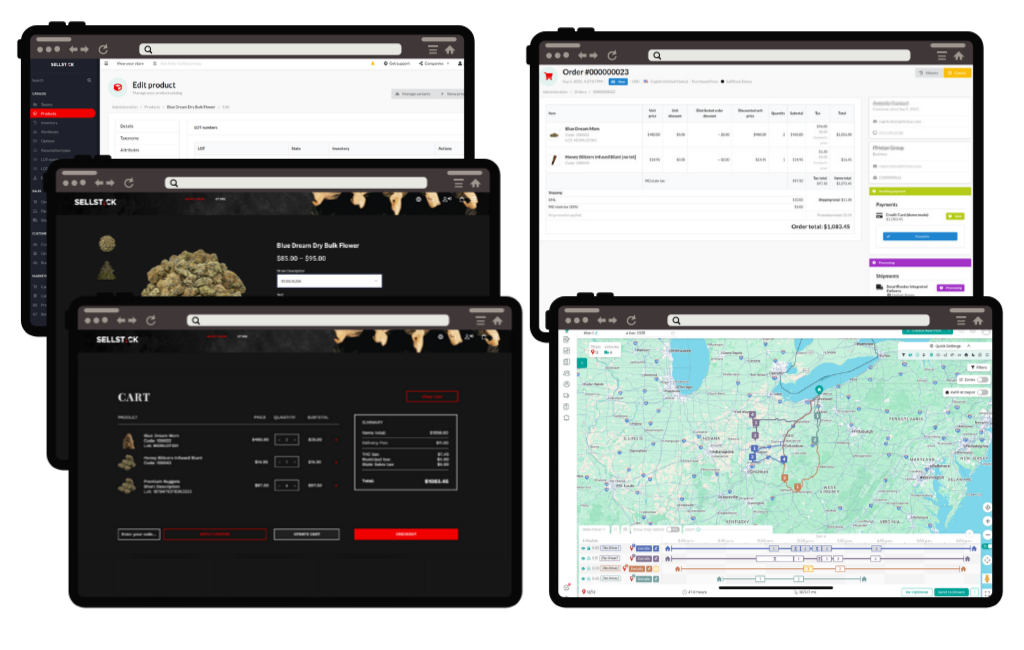
SellStack 365 Cannabis changes everything by providing a fully integrated, seed-to-sale-to-delivery ERP and e-commerce platform that automates core business processes, reduces manual overhead, and centralizes compliance data in real time. With native financial controls and audit trails, it helps maximize allowable deductions and tighten security workflows; its integrated e-commerce and delivery modules improve customer experience and order accuracy while reducing operational friction; and by standardizing data across cultivation, inventory, fulfillment, and sales, it enables better forecasting, reporting, and decision-making. This integration not only mitigates risk and cost but also unlocks digital revenue channels, streamlines regulatory reporting, and enhances cash-flow visibility turning a fragmented, error-prone technology stack into a unified system that supports scalable, compliant growth in a highly regulated market.
Real workflows replace fragile, manual processes with automated, connected systems that enforce how work actually gets done end to end. Instead of relying on spreadsheets, copy-paste handoffs, and tribal knowledge, these workflows tie together inventory, sales, compliance, finance, and fulfillment in a single source of truth. Errors are eliminated because data is entered once and validated at every step, approvals are built into the process, and audit trails are automatic. Hours are saved by removing reconciliation, rework, and manual reporting, allowing teams to operate in real time rather than chasing yesterday’s numbers. Most importantly, integrated workflows surface profit like a time machine: they show true margins by product, customer, channel, and delivery route as activity happens, not weeks later. By turning operational data into immediate financial insight, real workflows don’t just make businesses more efficient—they make profitability visible, predictable, and controllable.


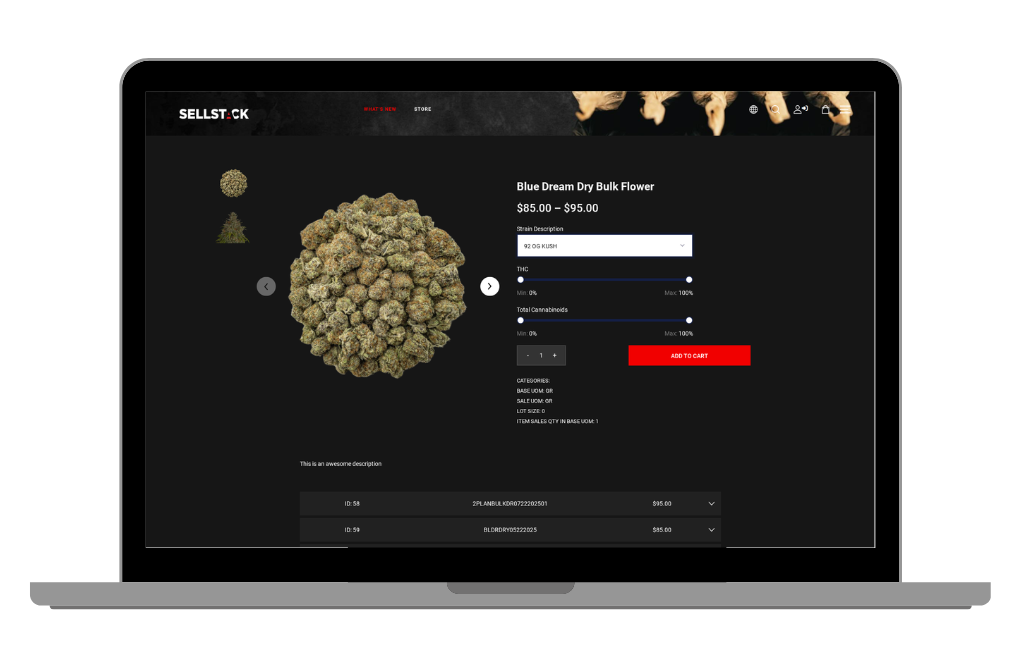
Being listed online is no longer a competitive advantage, it’s the minimum requirement. Customers today are overwhelmed with options, and when products, pricing, and availability look similar, the deciding factor becomes the experience. Upgrading your online experience is what turns passive visibility into active choice: fast, intuitive browsing, real-time inventory, transparent pricing, seamless checkout, and reliable delivery create confidence and reduce friction at the exact moment purchase decisions are made. A modern, integrated online experience doesn’t just showcase products, it communicates professionalism, trust, and operational competence. In crowded, regulated markets especially, the brands that win are the ones that make it easy to buy, easy to understand, and easy to come back—because when everything else looks equal, customers choose the business that works best.